 By Bridget Diaz
UGC (user-generated content) is short video and photo content you make for a brand to use on its own channels: its ads, its TikTok, its product pages, its emails. The brand pays you for the content itself, not for posting it to your followers. That's the part most people miss, and it's why you can start UGC with zero followers.
The short answer: to become a UGC creator, pick a niche, film 3 to 5 sample videos with products you already own, put them on one portfolio page, set your rates, then pitch 10 to 20 brands a week and follow up. You don't need followers, a big audience or special equipment.
This guide is the exact path we walk new creators through at Moli Mgmt. Do the steps in order and you'll go from "I want to try UGC" to pitching real brands in about two weeks.
How to become a UGC creator: the 8 steps
- Pick a niche you can film every week, using products you already own.
- Make 3 to 5 portfolio videos. No brand has to hire you first.
- Put your best videos in one portfolio and media kit link.
- Set your starting rates before any brand asks.
- Build a list of small, growing brands that already run creator-style ads.
- Pitch 10 to 20 brands a week with a short, specific email.
- Lock in every deal with a simple contract that covers usage rights.
- Deliver on time, get paid, and ask for a monthly package.
- You can start UGC for free. You need a phone, window light and products you already own.
- Followers don't matter in UGC. Brands pay for the video and run it on their own channels.
- Most first deals come from steady pitching and following up, not from talent alone.
What UGC actually is (and isn't)
A UGC creator is a content maker for hire. An influencer is paid for reach: their audience sees the post. A UGC creator is paid for the video: the brand runs it wherever it wants. Plenty of creators do both, but you don't need an audience to do the first one. More on that in UGC vs influencer.
- Brands buy UGC because it looks like a real customer talking, which usually outperforms polished ads.
- You deliver raw files (and sometimes edited cuts) to the brand. You usually don't post them yourself.
- You get paid per video or per package, plus extra if the brand wants to run your face in paid ads for a long time (usage rights).
| UGC creator | Influencer | |
|---|---|---|
| Paid for | The video itself | Reach to their audience |
| Followers needed | None | Usually thousands |
| Who posts it | The brand, on its ads and pages | The creator, on their own account |
| What to start with | A small portfolio of sample videos | A growing audience in one niche |
Step 1: Pick a niche you can film every week
Brands hire creators who look like their customers and who already use products like theirs. Pick one or two niches where you can film real, honest content without buying anything new. Good beginner niches are ones you already live in: skincare, home and cleaning, mom and baby, pets, fitness, food, tech accessories, beauty.
- Write down 10 products you already own in that niche. Those are your first portfolio videos.
- Pick the setting you'll film in most (your kitchen, bathroom, desk, car). Consistency makes you look experienced.
- Narrow beats broad. "Busy mom of toddlers who keeps a clean home" is easier to hire than "lifestyle".
Step 2: Make 3 to 5 portfolio videos (no brand needed)
Brands want to see what you'd make for them, so make it before anyone hires you. Use products you own and film them like a brand paid you. You don't need permission to review something you bought. Our full guide to making a UGC portfolio with no experience walks through each video.
- A hook-first testimonial: the problem, the product, the result, in 20 to 40 seconds.
- An unboxing or first impression with real reactions.
- A demo or how-to that shows the product working.
- A before and after (cleaning, skincare, organizing, cooking).
- A "3 reasons I switched to" or "things I wish I knew" list video.
Film vertically on your phone in good window light, keep each one under a minute, and write three different hooks for the same video. Brands love creators who hand them options.
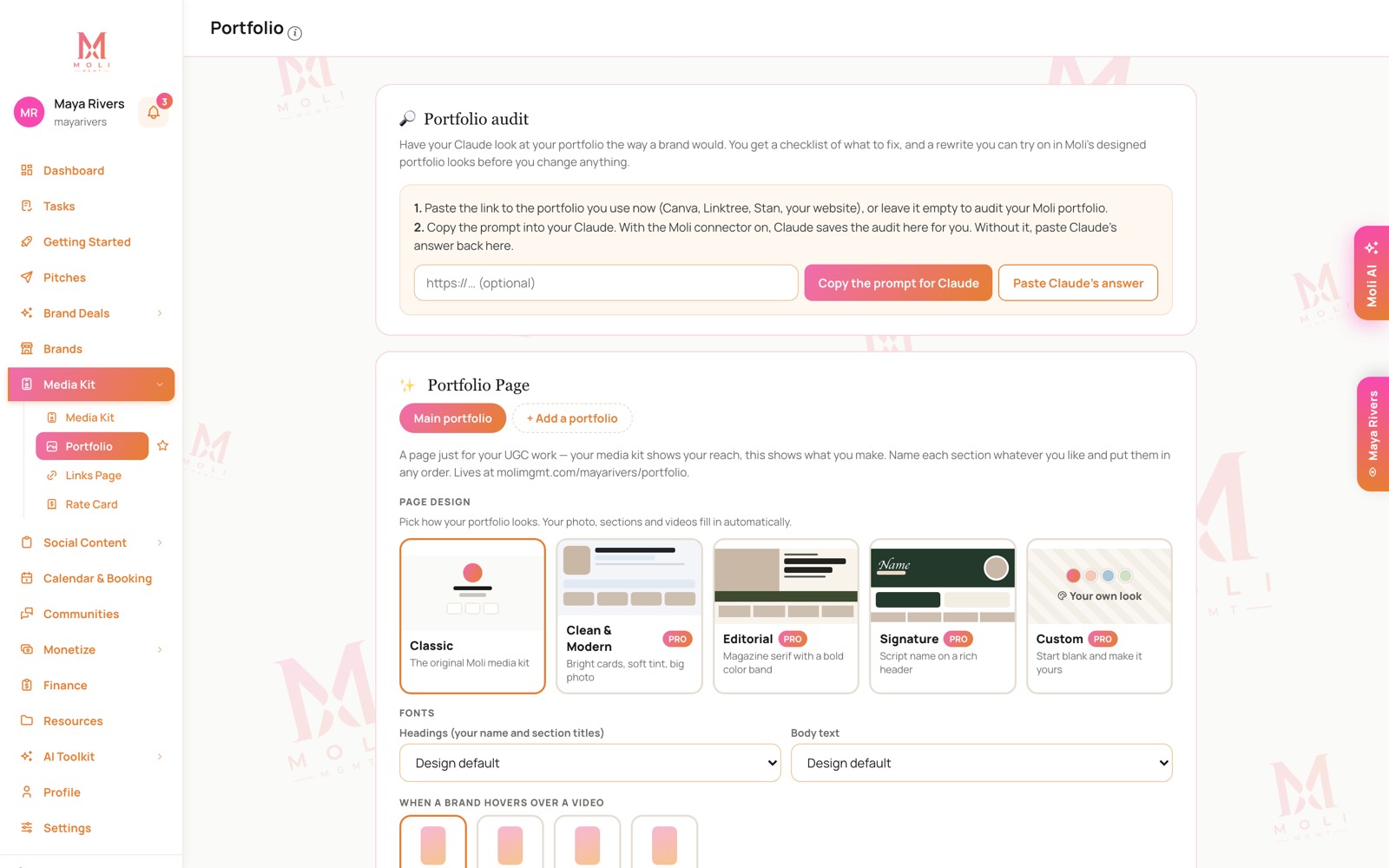
Step 3: Put your work in a portfolio and media kit
When a brand replies "send me your work", you need one link that does the job. That link should show your best 3 to 6 videos, who you are, your niches, what you offer, and how to book you.
- Lead with your strongest video, not your newest.
- Say what you make: "UGC videos, hooks, voiceovers, product photos".
- Add your location and who your content speaks to (the brand's customer, not your follower count).
- Keep it to one page. Brands skim.
In Moli, your media kit and portfolio are built from your profile, so you can share one link in every pitch and update it whenever you make something new.
Step 4: Set your starting rates
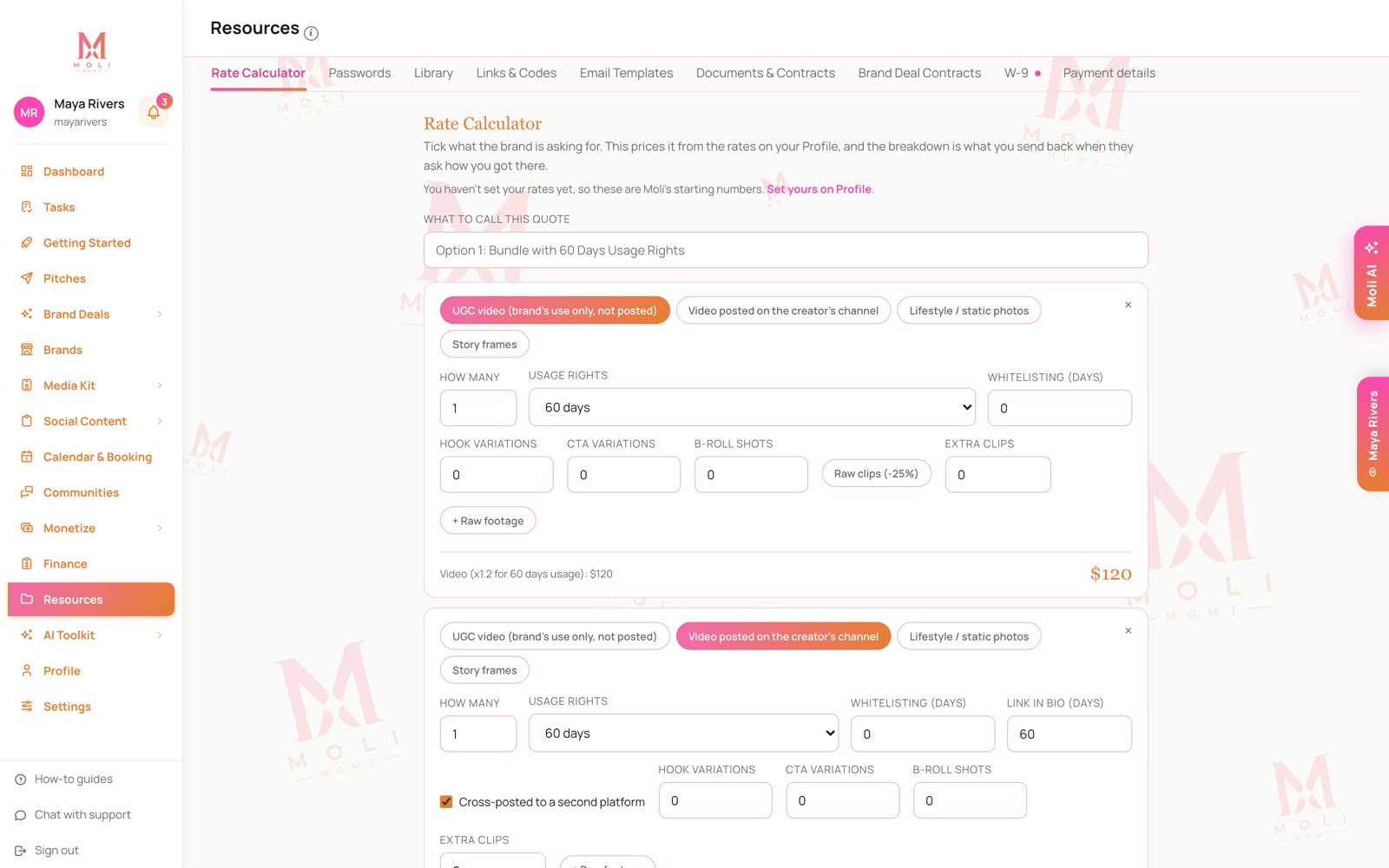
Decide your rates before a brand asks, so you're never making up a number on the spot. Price per video, then add for extras: extra hooks, raw footage, edited versions, and usage rights if the brand will run your video as a paid ad.
- Start with a base price per video you'd be happy to film tomorrow.
- Offer a 3-video package at a small discount. Most brands want more than one.
- Charge separately for paid usage and whitelisting, by length of time (30, 60, 90 days).
- Raise your rates every few deals. Your first rate is not your forever rate.
We break the numbers down in our guide to UGC rates for beginners. Moli's rate card keeps your prices in one place and puts them on your media kit if you want them shown.
Step 5: Find brands that hire UGC creators
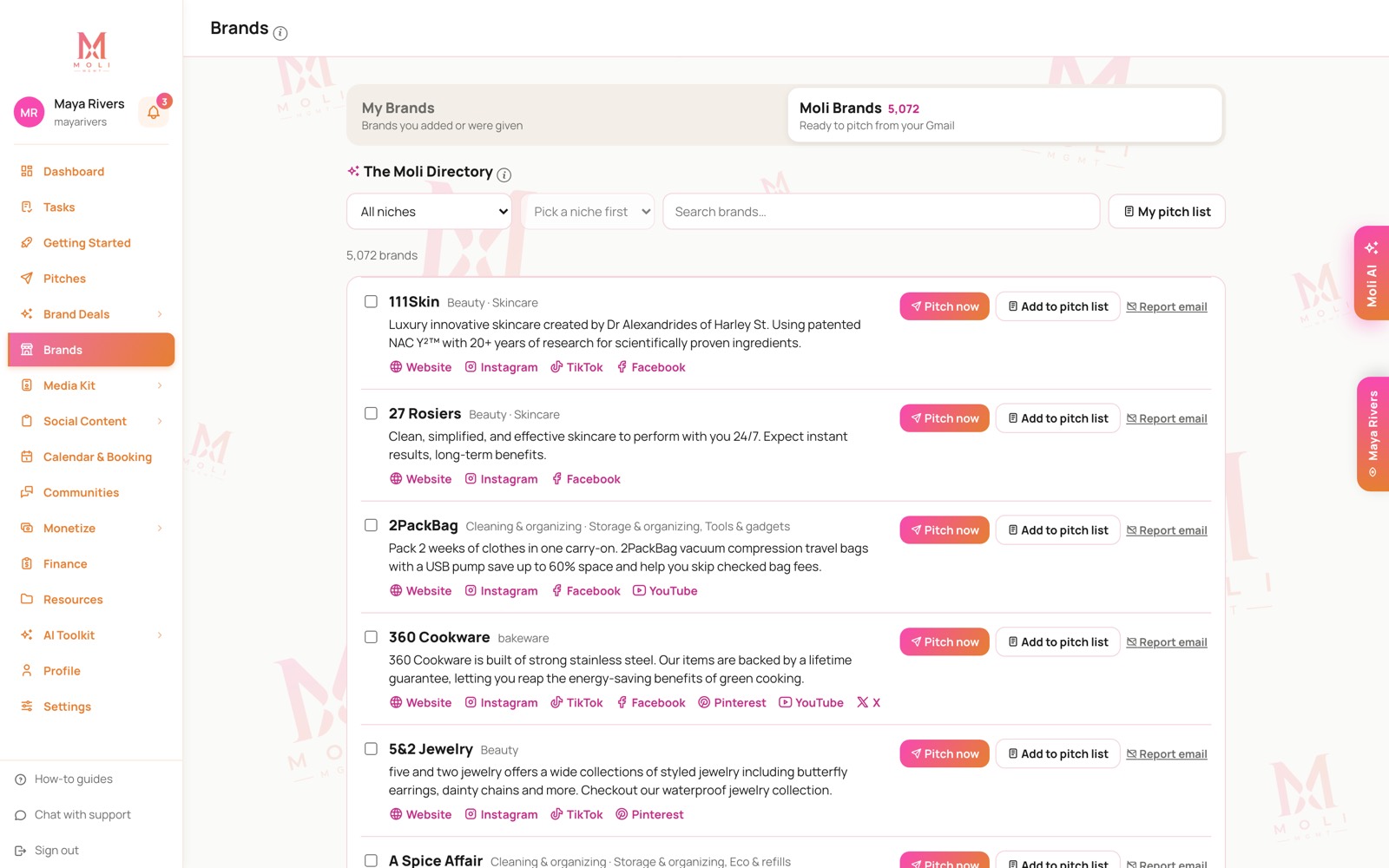
The best first brands are small and growing: they need content constantly and don't have an agency doing it for them. Look for brands that already run ads with real-person videos, sell on TikTok Shop or Amazon, or recently launched a product.
- Check the ads tab on a brand's Facebook or TikTok page. If they run creator-style ads, they buy UGC.
- Start with products in your niche that you'd genuinely recommend.
- Aim for 10 to 20 new brands a week. UGC is a numbers game early on. Here's how to find brands worth pitching.
- Find the right contact: a marketing, social, partnerships or influencer email, not the support inbox.
Moli's brand directory lists thousands of brands with their niches and whether they're actively sponsoring creators, so you can pick who to pitch in minutes instead of hours. Before you pitch, take 10 minutes to research each brand.
Step 6: Pitch like a professional
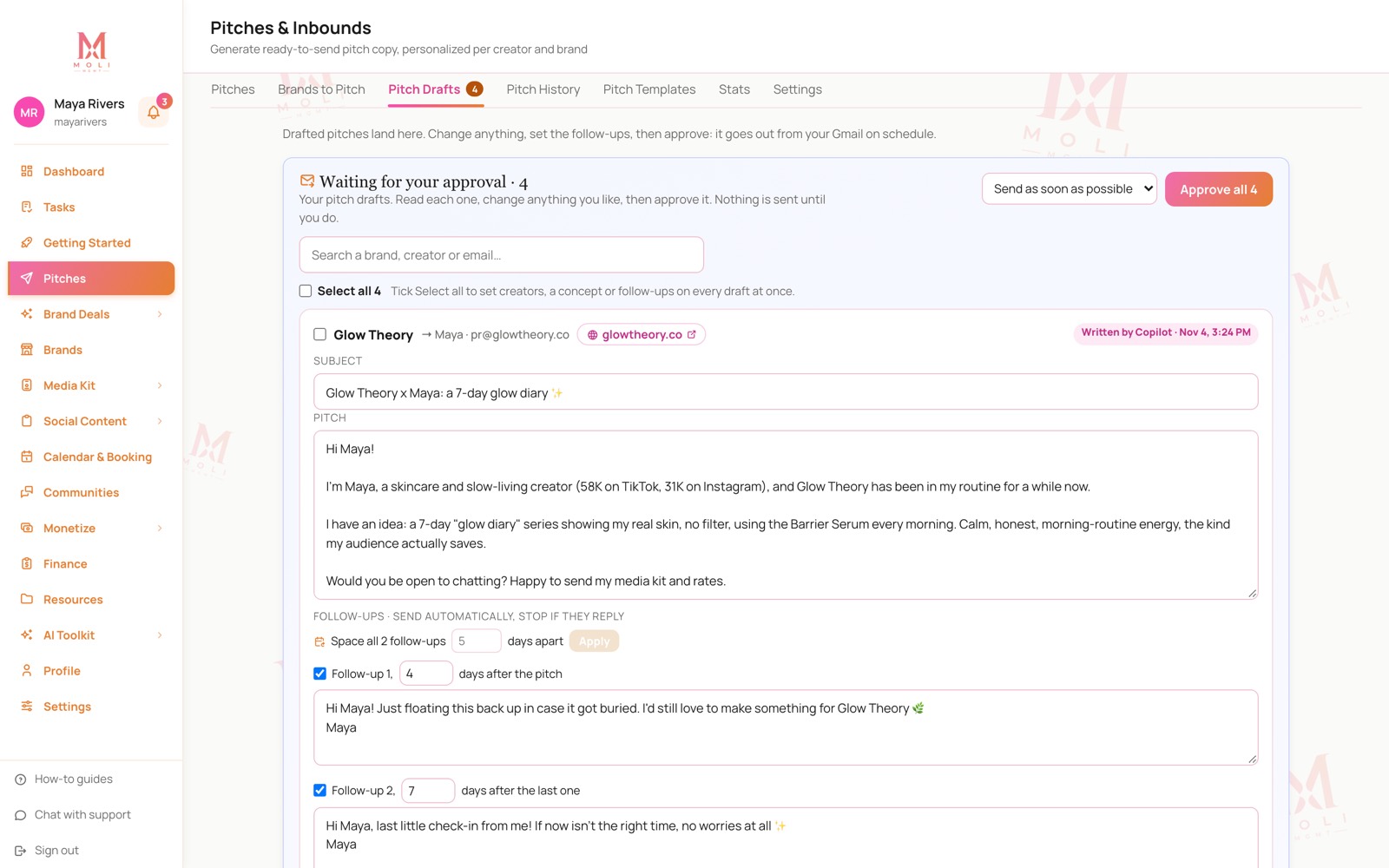
A good UGC pitch is short, specific to the brand, and ends with an easy question. Lead with one idea for their product, not your life story.
- Subject line: the content idea, not "Collab?".
- Line one: something real about their product.
- Line two: who you are and what you make, in one sentence.
- Line three: one specific video idea for them.
- Close: a simple yes or no question, like "Can I send over a few samples?"
Then follow up. Most brand deals come from the follow-up, not the first email. Send a short nudge four days later and a last one about a week after that. We cover word-for-word examples in how to pitch your first UGC brand, and how to write a pitch that gets read. For the full list, use our first UGC client checklist.
Step 7: Lock in the deal with a simple contract
Before you film, get it in writing. Even a one-page agreement protects you and makes you look experienced. Here's how to onboard a new UGC brand from yes to paid.
- Deliverables: how many videos, how long, how many hooks, raw or edited.
- Timeline: when the product arrives, when drafts are due, how many revisions.
- Payment: the amount, when it's due, and how (half up front is normal for new clients).
- Usage rights: where the brand can use the content and for how long. Paid ad usage costs extra. See usage rights 101.
- Product: gifted product is a bonus, not payment. Get paid for your work.
Two rules from official sources are worth knowing before you sign. First, the U.S. Copyright Office says copyright applies as soon as a work is fixed in a tangible form, and photographs and audiovisual works are covered. Unless your contract says otherwise, the video you film starts out as your work, so usage rights describe the permission you give the brand. That's why paid usage gets its own price and an end date.
Second, if you also post the content on your own account, the FTC's "Disclosures 101 for Social Media Influencers" guide says to disclose any financial relationship with the brand, including free or discounted products. The FTC guide says to put the disclosure in the video itself, not only in the description. On TikTok, the Branded Content Policy also requires turning on the commercial content disclosure toggle for branded posts.
Step 8: Deliver, get paid, and get the next deal
Deliver on time, label your files clearly, and send a short note with what's included. After the brand is happy, ask two questions: "Can I use this in my portfolio?" and "Would you like a monthly package?" Repeat clients are where UGC turns into real income. When you're ready, here's how to start a UGC business that pays every month.
How much do UGC creators make? Real numbers from Moli
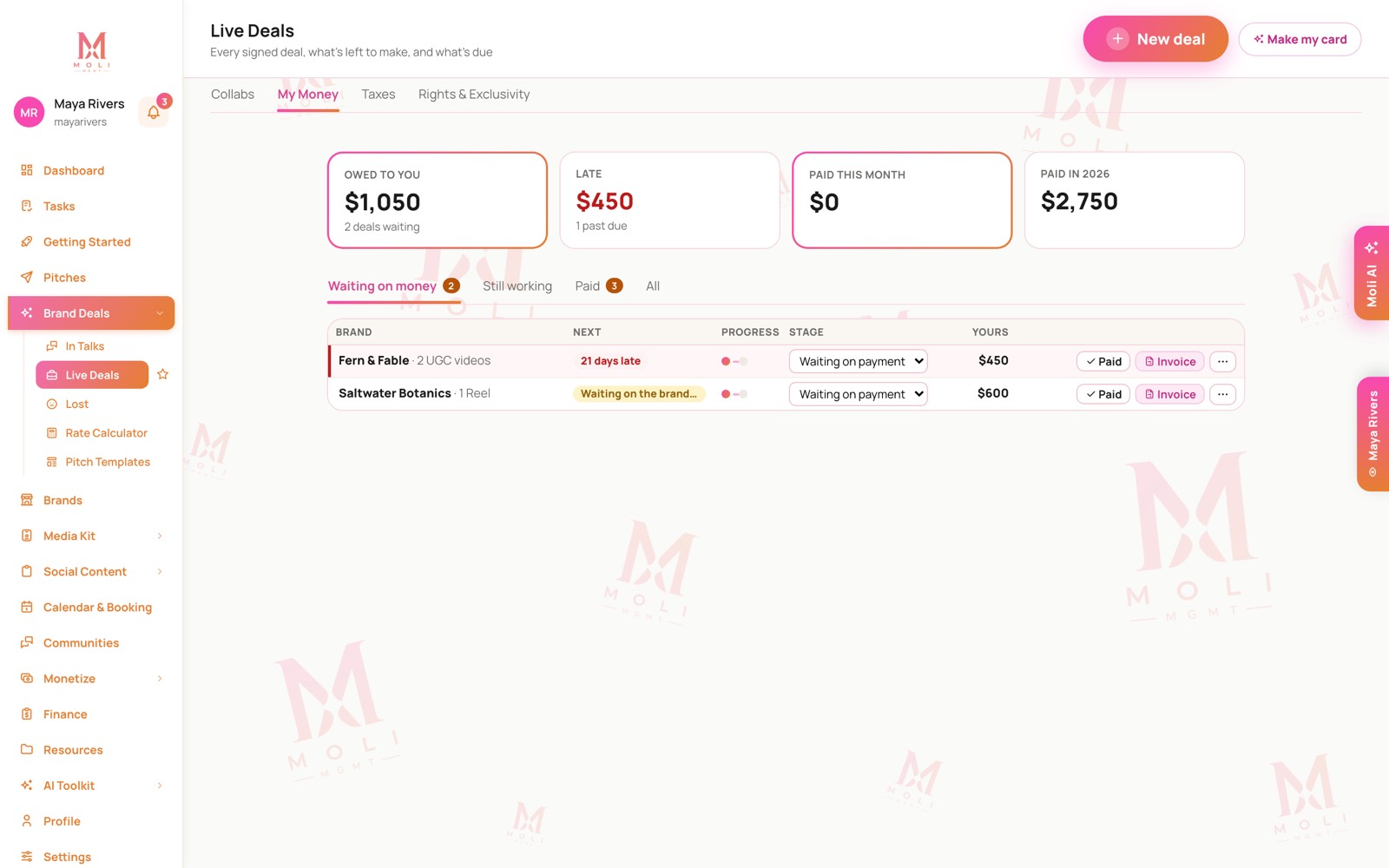
Most rate guides guess. These numbers come from 655 paid brand deals that creators and managers tracked in Moli, as of November 2026 (gifted-only deals left out).
- The typical paid deal was $250. The middle half of deals landed between $150 and $500.
- Deals marked as UGC (content the brand runs on its own channels) had a typical value of about $400.
- About 1 in 10 pitches got a reply from the brand.
- About 1 in 5 replies came after a follow-up, not the first email.
What that means for you: a first deal is a numbers game. If roughly 1 in 10 pitches gets a reply, pitching 15 brands a week with follow-ups gives you a steady stream of conversations within a month. Price from the start with beginner UGC rates, and charge extra when a brand wants to run your video as a paid ad.
A simple first-month plan
- Week 1: pick your niche, film 3 portfolio videos, set up your media kit.
- Week 2: set your rates, build a list of 30 brands, write your pitch.
- Week 3: pitch 10 to 15 brands, follow up on last week's pitches.
- Week 4: keep pitching, film 2 more portfolio videos from what you learned, follow up again.
That's how to become a UGC creator: a clear niche, a small portfolio, a rate you've decided ahead of time, and a steady pitching habit. The creators who land deals aren't always the most talented. They're the ones who keep pitching and follow up.
Questions people ask
Can you do UGC with no followers?
Yes. Brands pay UGC creators for the content itself and run it on their own channels, so your follower count doesn't matter. What matters is your portfolio and whether you look like the brand's customer.
How much money do UGC creators make?
Across 655 paid brand deals tracked in Moli, the typical deal was $250 and the middle half landed between $150 and $500. Deals marked as UGC averaged about $400. Your rate depends on your niche, what you deliver and the usage rights, so charge extra for paid ad usage.
How long does it take to get your first UGC deal?
With a portfolio and steady pitching (10 to 20 brands a week, with follow-ups), many creators land a first paid deal within a few weeks. Following up is what makes the difference.
Do I need a business to start UGC?
You can start as an individual. The IRS's self-employed tax center says independent contractors are generally self-employed, and that you must file a tax return if your net self-employment earnings are $400 or more. Keep track of your income and expenses, use a simple contract for every deal, and register a business later if it makes sense for you.
How do I become a UGC creator with no experience?
Make your experience. Film 3 to 5 sample videos with products you already own, exactly as if a brand had hired you, and put them on one portfolio page. Then pitch small brands in that niche every week and follow up.
Can I start UGC for free?
Yes. All you need is a phone, good window light and products you already have. A free Moli account gives you a media kit, a portfolio link, pitch templates and a tracker for your pitches and deals.
How many videos do I need in a UGC portfolio?
Three to five is enough to start pitching. Cover different formats: a testimonial, an unboxing, a demo, and a before and after. Lead with your strongest one.
Is gifted product enough payment for UGC?
Gifted product is a nice extra, but UGC is paid work. Brands use your content to sell, so ask for a fee for every video you make.
Sources
Moli gives you a media kit, a rate card, a directory of brands to pitch, pitch templates and a tracker that follows up for you. The free plan is enough to land your first deal.
Start UGC with Moli, freeKeep reading
How to Make a UGC Portfolio With No Experience
Every UGC creator starts with an empty portfolio. Here's how to fill it with five videos brands want to see, using things already in your house.
UGC Rates for Beginners: How to Price Your First Videos
Your first rate is the one you'll be nervous to say out loud. Here's how to build it, what to charge extra for, and when to raise it.
UGC Creator vs. Influencer: What's the Difference?
Same phone, same products, very different jobs. Here's what separates a UGC creator from an influencer, and why you don't need followers for one of them.